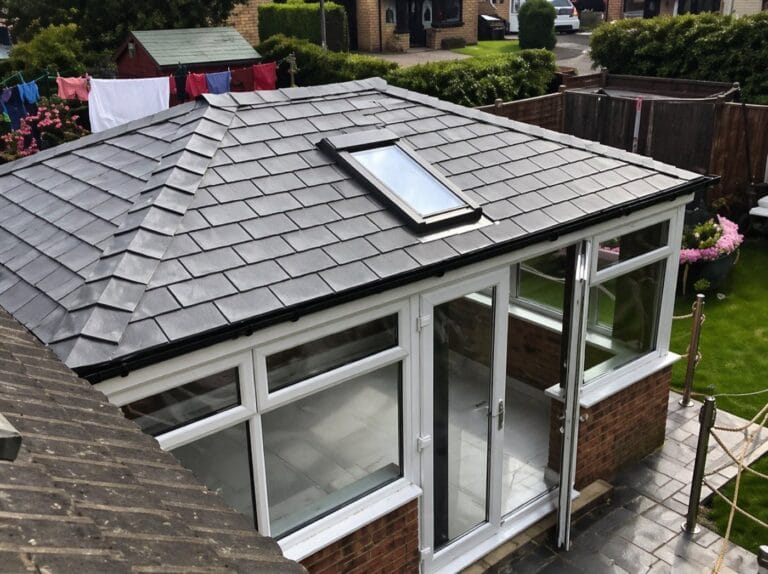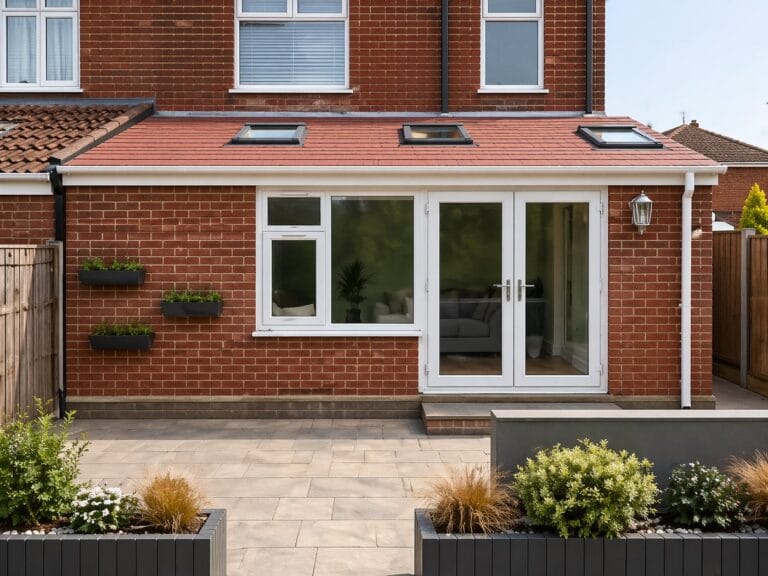
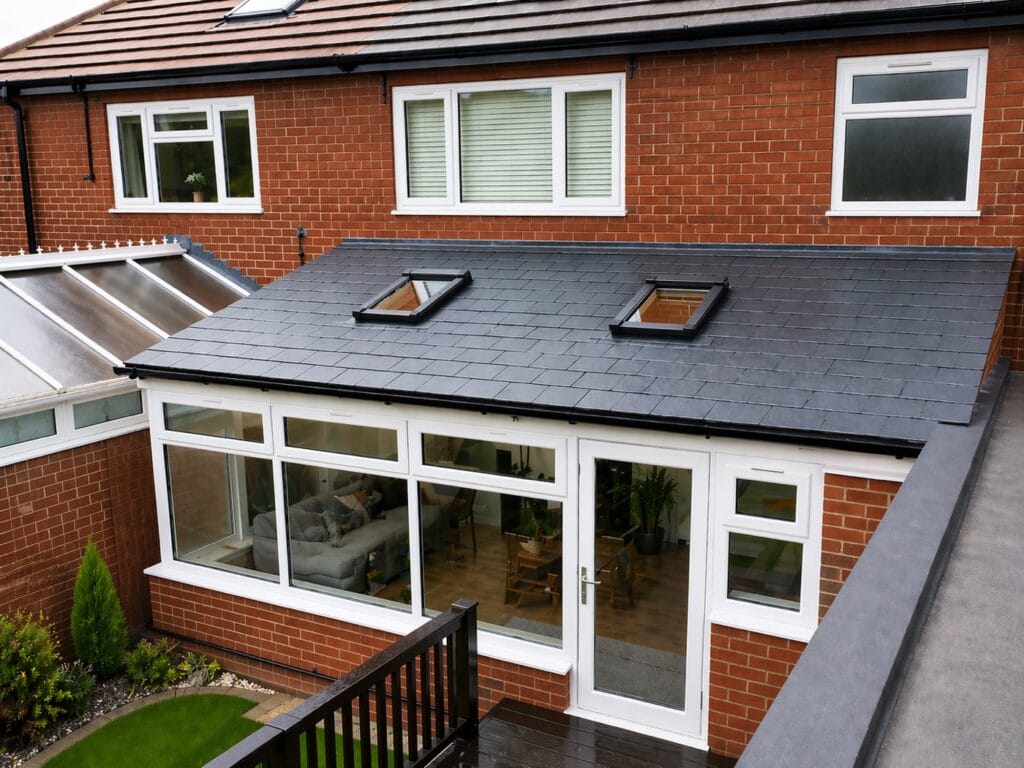
For most homes in England, an insulated tiled roof is the best conservatory roof. It keeps the room warmer in winter and cooler in summer, and it is far quieter in the rain, so the conservatory can be used all year. Glass is the better choice if natural light matters more than anything else. Polycarbonate is the cheapest option, but it performs worst on almost every other measure.
The right roof still depends on what you want from the room, your budget and the condition of the existing frames. This guide compares the main options across eleven factors, then brings them together in one comparison table and a simple guide to choosing by priority.
The main conservatory roof types
- Tiled roof. An insulated solid roof finished with lightweight tiles or slates, designed to look like the roof of the main house. Skylights can be built in to bring in daylight.
- Glass roof. Double glazed units in an aluminium or uPVC frame, often with solar control and self cleaning coatings.
- Polycarbonate roof. Lightweight plastic sheets with hollow channels inside, typically 16mm to 35mm thick. Many conservatories built in the 1990s and 2000s have one.
Is a tiled roof the same as a solid roof?
A tiled roof is a type of solid roof. “Solid roof” is the general term for any insulated conservatory roof you cannot see through, and tiles are the most popular finish because they match the house. Flat roofs with a fibreglass or rubber finish and smooth insulated panel roofs also exist, but when most people talk about a solid conservatory roof, they mean a tiled one. So the comparisons below between tiled and glass also answer the solid versus glass question.
A warm roof is simply another name for an insulated solid roof, so the two terms describe the same thing. A tiled warm roof conservatory is what this guide means by a tiled roof.
Factors influencing the choice of roof
Winter warmth and energy efficiency
A tiled roof keeps a conservatory far warmer in winter because it contains thick insulation, much like a house roof. Building regulations require a new roof on an existing home to reach a U value of 0.15 or lower. A U value shows how quickly heat escapes, so a lower number means a warmer room. Manufacturers quote U values as low as 0.15 for tiled conservatory roofs.
Glass and polycarbonate fall well short of that. Standard roof glass is around 2.8 and 16mm polycarbonate around 2.3, which means heat escapes more than ten times faster. Premium glass gets down to about 1.0, which is a big improvement but still several times worse than an insulated roof.
For keeping a conservatory warm and cutting energy use, a tiled roof is the clear winner.
Summer comfort
Glass and polycarbonate roofs let in a lot of the sun’s heat, which is why so many conservatories become too hot to use on sunny afternoons. Ultraframe’s figures show clear 25mm polycarbonate lets through 63% of the sun’s energy. Solar control glass helps a great deal: Ultraframe’s performance glass rejects between 51% and 82% of solar energy, depending on the type. An insulated tiled roof blocks almost all of the heat from above.
To keep a conservatory cool, choose a tiled roof. If you want to keep a glass roof, solar control glass is the best option.
Noise
Polycarbonate is the noisiest conservatory roof in the rain. In rain noise tests by the Building Research Establishment (BRE rain noise study), a 25mm polycarbonate roof measured 64.6 dBA under heavy simulated rain, while laminated double glazing measured 52.0 dBA. That difference of about 12.6 decibels sounds more than twice as loud to most people. A tiled roof is quieter again, because the insulation and tiles soak up the sound in the same way a normal house roof does.
For noise reduction, a tiled roof is best. Glass is a reasonable middle ground.
Natural light
A glass roof gives the most natural light. Clear roof glass lets through around 77% of daylight and gives an open view of the sky. Clear 25mm polycarbonate lets through about 65%, and the light is diffused and the view is lost. A tiled roof blocks light from above, although roof lights or glazed panels can bring some back. The glazed side walls also stay, so the room is usually brighter than people expect.
For the most natural light, glass is the best choice.
Glare
Glare is the harsh, bright light that bounces off screens and makes a room uncomfortable to sit in. Clear glass and clear polycarbonate roofs produce plenty of it, especially on south facing conservatories. Tinted solar control glass reduces glare, but it also cuts the light coming through to between about 24% and 56%. Opal polycarbonate softens glare as well, letting through 31% of light. A tiled roof removes overhead glare almost completely.
For a home office or TV room, a tiled roof gives the least glare.
Appearance
A tiled roof is designed to blend in with the house, so the conservatory looks more like a proper extension. A tiled conservatory roof can usually be matched to the colour and style of the existing house roof. Glass looks light and sleek, especially with slim frames, and suits modern homes. Polycarbonate tends to look dated, and older sheets often turn yellow, hazy or green.
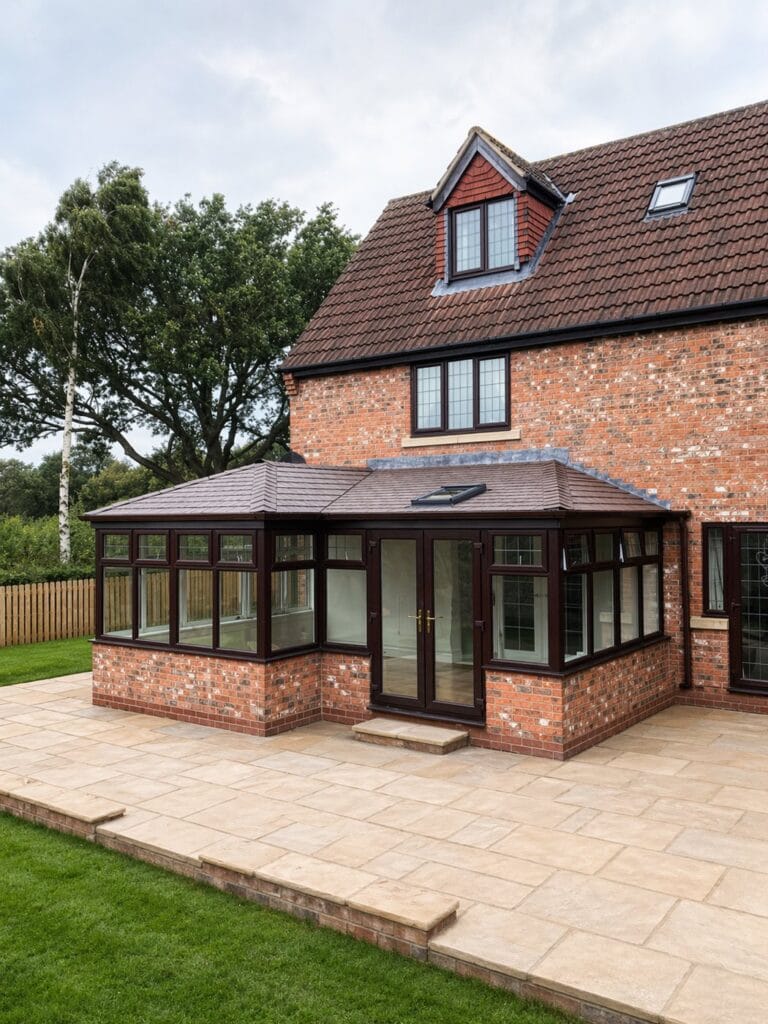
Tiled roofs look best on most houses, while glass suits contemporary designs.
Lifespan
Polycarbonate has the shortest life. Manufacturers typically guarantee the sheets for around 10 years, and sunlight gradually yellows the plastic and reduces how much light gets through. Many polycarbonate roofs need replacing well before a glass or tiled roof would. Glass roofs last longer, although their seals and sealed units need attention over time. Tiled roofs are built like a house roof, and lightweight slate products have been independently assessed (BBA) to last at least 20 years.
A tiled roof lasts the longest, while polycarbonate wears out first.
Maintenance
Polycarbonate needs the most upkeep. Dirt, moss and algae build up in the joints and inside the hollow channels, and the seals perish over time. Glass needs cleaning, although most modern roof glass now comes with a self cleaning coating as standard. A tiled roof needs little more than an occasional check of the gutters and flashings.
For the lowest maintenance, choose a tiled roof.
Cost
Polycarbonate is the cheapest roof to install, and tiled and glass roofs cost more but sit closer together than many people expect. Checkatrade’s cost guide puts average prices at around £600 per square metre for polycarbonate, £750 for tiled and £900 for glass. At Warm Roof Conservatory every tiled roof is priced on its size and the skylights you choose, with plastering, electrics and your choice of tiles included, and the free survey gives you your exact price in writing. There is more on the costs page.
On upfront price alone, polycarbonate is cheapest. Over the life of the roof, a tiled roof often works out better value thanks to lower heating costs, a longer life and less maintenance.
Structural requirements
Glass and polycarbonate are relatively light, so replacing one with the other rarely needs structural work. A tiled roof is heavier, at around 38kg per square metre for one popular system (Ultraframe’s Ultraroof), which is why the survey checks the frame and base. Building control guidance says the frames may need reinforcing and the foundations may need checking before a solid roof is fitted.
Replacing a glazed roof with a tiled one needs a Building Regulations application, LABC guidance says, because the conservatory is no longer treated as a glazed structure. A reputable installer will arrange this. Planning permission is not normally needed for a replacement roof, but check first if the house is listed or in a conservation area.
Polycarbonate and glass are the simplest to fit. A tiled roof needs a structural survey and building control approval.
Suitability for an older conservatory
Older conservatories with tired polycarbonate or glass roofs are often the best candidates for an upgrade. A conservatory roof replacement keeps the existing frames and base, provided they are sound, and replaces only the roof. This costs far less than building a new conservatory and turns a room that is too cold in winter and too hot in summer into one that can be used every day.
If the frames or foundations are not strong enough for a new roof, or the budget is limited, insulation fitted beneath the existing roof is a lower cost alternative, although the old roof, with its seals and its condensation risk, stays in place. Replacing an old polycarbonate roof with new polycarbonate is usually the least worthwhile option, because the same problems come back.
For most older conservatories, a tiled roof is the best upgrade, as long as the structure passes a survey.
Conservatory roof comparison table
| Factor | Tiled (solid) roof | Glass roof | Polycarbonate roof |
|---|---|---|---|
| Winter warmth | Excellent | Fair (good with premium glass) | Poor |
| Summer comfort | Excellent | Fair (good with solar control glass) | Poor |
| Energy efficiency | Excellent | Fair | Poor |
| Noise in rain | Very quiet | Moderate | Loud |
| Natural light | Low unless roof lights are added | Excellent | Good but diffused |
| Glare | Very low | High (lower with tinted glass) | Medium to high |
| Appearance | Traditional, matches the house | Sleek and bright | Often looks dated |
| Typical lifespan | Longest | Medium | Shortest |
| Maintenance | Low | Medium | High |
| Upfront cost | Medium | Medium to high | Low |
| Structural needs | Survey and building regulations approval | Usually minimal | Minimal |
| Use all year round | Yes | Limited in very hot or cold weather | Mainly spring and autumn |
Which roof suits your priorities?
Most people choose a roof based on one or two things that matter most to them. This table matches the most common priorities to the roof that suits them best.
| Your main priority | Best roof | Also worth considering |
|---|---|---|
| Using the conservatory all year round | Tiled | Solar control glass |
| Keeping warm in winter | Tiled | Premium glass |
| Keeping cool in summer | Tiled | Solar control glass |
| Lower energy bills | Tiled | Premium glass |
| A quiet room in the rain | Tiled | Laminated glass |
| Maximum natural light | Glass | Tiled roof with roof lights |
| A home office or TV room | Tiled | Tinted solar control glass |
| Matching the look of the house | Tiled | Glass with frames to match |
| A modern look | Glass | Tiled roof with glazed panels |
| Lowest upfront cost | Polycarbonate | Insulation under the existing roof |
| Lowest long term cost and upkeep | Tiled | Glass |
| Upgrading an old conservatory | Tiled | Roof insulation if the frames are weak |
So which conservatory roof is best?
For most people who want to use their conservatory all year, a tiled roof is the best choice. It performs best on warmth, summer comfort, noise, lifespan and maintenance. That matters because conservatories are often left empty in winter. The most recent national survey of conservatories (BRE, 2011) found that 59% are used less than once a week in winter, compared with 70% used almost every day in summer.
Glass makes sense when natural light is the top priority, and solar control glass removes some of its drawbacks. Polycarbonate keeps the upfront cost down, but it is the hardest roof to live with and usually the first to need replacing.
Before choosing, it is worth having the existing frames and base checked, because their condition decides which roofs are possible. Warm Roof Conservatory fits insulated tiled roofs to existing conservatory frames, and a free survey confirms whether yours can take one.