Condensation in a conservatory happens when warm, moist air touches a cold surface and cools enough to turn back into water. The roof and glass are almost always the coldest surfaces in the room, so that is where water collects first. Conservatories are far more prone to this than the rest of the house because they are mostly glass, glazing bars and thin roofing, which lose heat much faster than insulated walls and ceilings.
In most homes, conservatory condensation comes down to too much moisture in the air, cold roof and glass surfaces, and not enough ventilation. A light mist on the glass on a cold morning is normal. Water streaming down the roof bars, dripping onto the floor, black mould on the seals or a musty smell all point to a bigger problem, and sometimes that problem is a leak rather than condensation.
What causes condensation in a conservatory?
The main causes are high humidity, cold glass and roofing, poor ventilation, and the way the room is heated and used.
Warm air can hold more moisture than cold air. When warm, moist air touches a surface that is much colder than the room, it cools down and can no longer hold all of that moisture, so the extra moisture turns into water droplets on the surface. The damper the air and the colder the surface, the more water appears. On a winter night, the inside of a conservatory roof easily gets cold enough for this to happen.
Too much moisture in the air
The more moisture there is in the air, the warmer a surface needs to be to stay dry. An average household puts around 12 litres of moisture into the air every day, and more than 20 litres when clothes are dried indoors (South Kesteven District Council). Common moisture sources in a conservatory include:
- Drying washing, which can add 3 to 7.5 litres of moisture to the home (Energy Action Scotland).
- Paraffin heaters, which produce about 4 litres of moisture for every 3.5 litres of fuel burned, and flueless gas heaters, which can produce up to 350cc an hour (Glass and Glazing Federation).
- Plants, pets and people.
- Moist air drifting in from the kitchen and bathrooms through the connecting door.
A newly built conservatory can also suffer more condensation for its first few months while the base and brickwork dry out.
Cold glass and a cold roof
Condensation is more likely in winter because the gap between indoor and outdoor temperatures is larger. A conservatory’s glass and roof panels end up much closer to the outdoor temperature than an insulated wall would, so they are usually the first surfaces to turn wet.
Not enough ventilation
Ventilation replaces moist indoor air with drier outdoor air. The English Housing Survey 2023 to 2024 found that 60% of homes with inadequate ventilation had damp problems, against 5% of homes with adequate ventilation. Conservatories of 30m² or less are exempt from the ventilation requirements in the Building Regulations, so many were built with few opening windows and no roof vent.
How the conservatory is heated and used
According to the BRE conservatory survey for the government (2011), 59% of conservatories in England are used less than once a week in winter, and 20% of those with heating are never heated in winter. A room warmed in short bursts holds plenty of moisture while warm, then cools quickly, leaving that moisture on the roof overnight. A room left cold and closed collects moisture from the house with no heat to keep its surfaces above the dew point.
Why is your conservatory roof covered in condensation?
A conservatory roof gets covered in condensation because it is usually the coldest surface in the room, and warm, moist air rises straight up to it. Polycarbonate and glass roofs lose heat far faster than an insulated ceiling, so on cold nights their inside surface drops below the dew point and moisture condenses across the whole roof.
Roofing materials are rated by their U value, which simply shows how quickly heat escapes through them. The lower the number, the less heat is lost and the warmer the inside of the roof stays, so less condensation forms.
| Roof type | Typical U value (W/m²K) | Condensation risk |
|---|---|---|
| Standard double glazed roof glass | 2.8 | High |
| 16mm polycarbonate | 2.3 | High |
| 25mm polycarbonate | 1.7 | Moderate to high |
| Premium solar control glass | Around 1.0 | Lower |
| Insulated warm roof | Around 0.15 | Very low |
A thin polycarbonate or older glass roof loses heat more than ten times faster than an insulated solid roof, which is why older conservatories stream with water on winter mornings. Upgrading to conservatory roof insulation or a solid roof closes most of that gap.
The aluminium glazing bars, ridge and eaves beam make things worse. Aluminium conducts heat very well, so these parts act as cold bridges and often collect heavier condensation than the panels themselves. Polycarbonate sheets have another weakness. If their end seals fail, moist air gets inside the hollow channels and condenses there, leaving trapped water, algae or black spots that cannot be cleaned.
Why is water dripping from your conservatory roof?
Water drips from a conservatory roof either because condensation has gathered and run to a low point, or because rainwater is getting in through a leak. Condensation drips usually appear on cold mornings, often in dry weather, fall from many points along the bars and eaves, and ease off as the room warms up. Leak drips appear during or after rain, come from the same spot each time and often leave stains.
Is it condensation or a leaking conservatory roof?
The quickest way to tell condensation from a leaking conservatory roof is to link the water to the weather. Condensation appears on cold mornings, even in dry spells, and is spread across the roof and glass. A leak appears during or after rain and comes from the same place each time.
| Sign | Condensation | Leak |
|---|---|---|
| When it appears | Cold mornings, in dry weather too | During or after rain |
| Where it appears | Across the glass, bars and eaves | One spot, often at the wall junction, ridge or gutter |
| After airing and heating | Clears up | Carries on |
| Marks left behind | Black mould on seals and corners | Tide marks, stained plaster, swollen timber |
To test, wipe the roof bars dry and check them after a dry, cold night. If they are wet again, condensation is at work. If they only get wet after rain, the water is coming from outside. The Housing Ombudsman has reported a case where mould was treated for months before the real cause, a leak from a rainwater downpipe, was found.
Failed seals, flashings and glass units
Most conservatory roof leaks start at the joints. Common weak points are the lead flashing where the roof meets the house wall, rubber gaskets along the glazing bars, ridge caps, perished silicone and polycarbonate end caps. A roof 15 to 20 years old may have several failing at once.
Misting between the two panes of a double glazed unit is different again. According to the Glass and Glazing Federation’s condensation guide, moisture inside the cavity means the unit’s seal has failed and the unit needs replacing, while condensation on the outside of the glass is a sign of efficient glazing.
Gutters and drainage
Blocked gutters are one of the most overlooked causes of water inside a conservatory. When the eaves gutter, a box gutter against the house or a valley fills with leaves and moss, rainwater backs up and overflows into the frame or down the inside wall, which can look exactly like condensation.
Where a roof is leaking in several places and also suffers heavy condensation, patching one seal at a time rarely lasts. That is usually when homeowners compare repairs with a conservatory roof replacement.
Why is there mould in your conservatory?
Mould grows in a conservatory when surfaces stay damp for long enough, and repeated condensation is the most common reason they do. The British Standard for controlling condensation (BS 5250) explains that mould can grow once humidity at a surface passes 80%, which is likely on cold walls, windows and roofs when the room air stays above 70% for several days.
The room does not need to be damp all the time. UCL researchers give the example of a surface at 90% humidity for just 20% of the time, which may be enough for mould to grow. A conservatory that feels fine by day can still grow mould if the roof runs with condensation for a few hours each night.
Mould usually appears first on silicone seals and gaskets, the bottom corners of window frames, roof blinds and curtains, behind furniture against cold walls, and inside polycarbonate sheets. Damp and mould are linked to breathing problems, especially for children and people with asthma. Cleaning mould off helps for a while, but it returns unless the condensation is reduced.
Why does your conservatory smell damp?
A damp or musty smell in a conservatory almost always means mould or mildew is growing somewhere, even if it cannot be seen. The World Health Organization lists mould odour as one of the main signs of indoor dampness. Hidden sources include rugs and carpets soaked by drips, cushions left in a cold room for weeks, mould inside roof sheets or behind blinds, and a slow leak in a wall or frame. If the smell is strongest after rain, look for a leak; if it is strongest after cold nights, condensation is the likely cause.
How to reduce condensation in your conservatory
The most effective ways to reduce conservatory condensation are to put less moisture into the air, ventilate daily, and keep the temperature steady. These steps cost little and solve many milder cases, though they cannot fully overcome a very cold roof.
- Measure the humidity. A cheap digital hygrometer shows relative humidity. Aim for roughly 40% to 60% day to day. Government ventilation guidance (Approved Document F) uses a one month moving average below 65% in the colder months as its benchmark for new homes.
- Stop adding moisture. Dry washing elsewhere, avoid paraffin and bottled gas heaters, keep plants away from the glass and close the house door while cooking or showering.
- Ventilate every day. Open roof vents, trickle vents or windows for 10 to 15 minutes, even in winter, and keep vents clear of blinds. The Glass and Glazing Federation recommends crossflow ventilation through wall and roof vents.
- Heat steadily. Low background heat on a thermostat keeps surfaces warmer than short bursts of heating.
- Use a dehumidifier. A desiccant model works better than a compressor model in a cool room.
- Maintain the roof. Clear gutters, check seals and flashings, and wipe away early mould before it takes hold.
Will insulation or a new roof stop conservatory condensation?
Insulating or replacing a conservatory roof can greatly reduce roof condensation because it keeps the inside surface close to room temperature, above the dew point. It is often the most effective long term fix when a cold glass or polycarbonate roof is the main problem. Neither option removes moisture from the air, though, so ventilation still matters and some condensation can still form on the windows.
It is worth diagnosing the problem first. RICS damp guidance says to find the source of the moisture first and fix defects in the property, then improve ventilation and day to day habits. If the roof still streams every cold night with good ventilation, the roof itself is the weak point.
Conservatory roof insulation
Insulation fitted beneath an existing roof, as panels or a false ceiling, is quicker and cheaper than a replacement, but installation quality is critical. If moist air gets through gaps, it can condense out of sight on the cold roof above, so a proper vapour control layer and sealed joints are essential, and the old roof stays in place with its seals and flashings. Building the insulation into a new roof avoids both problems, which is how Warm Roof Conservatory fits it.
Warm roof replacement
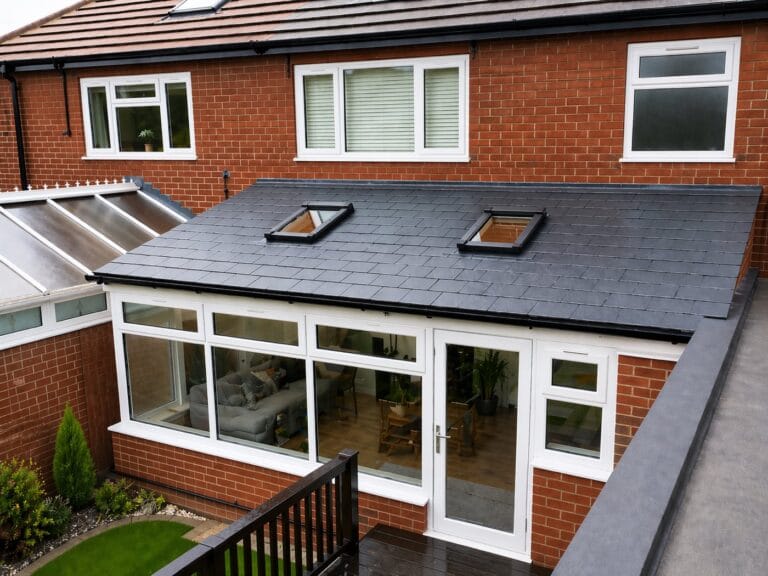
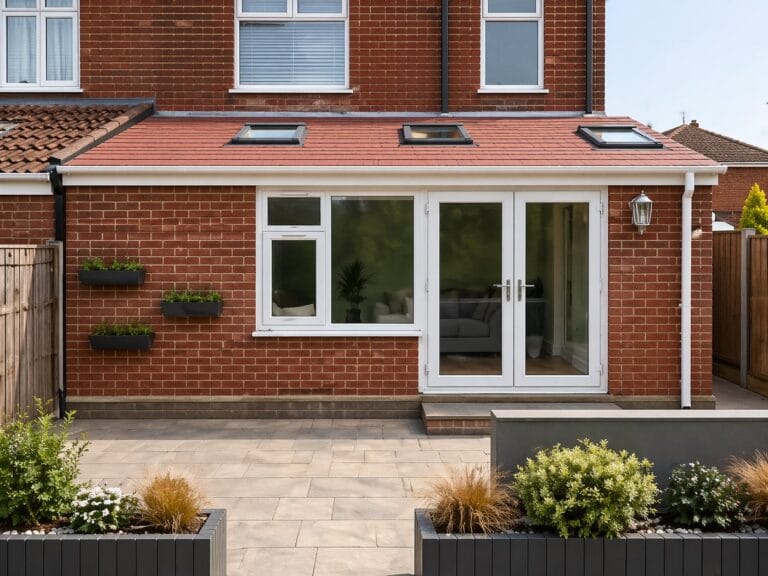
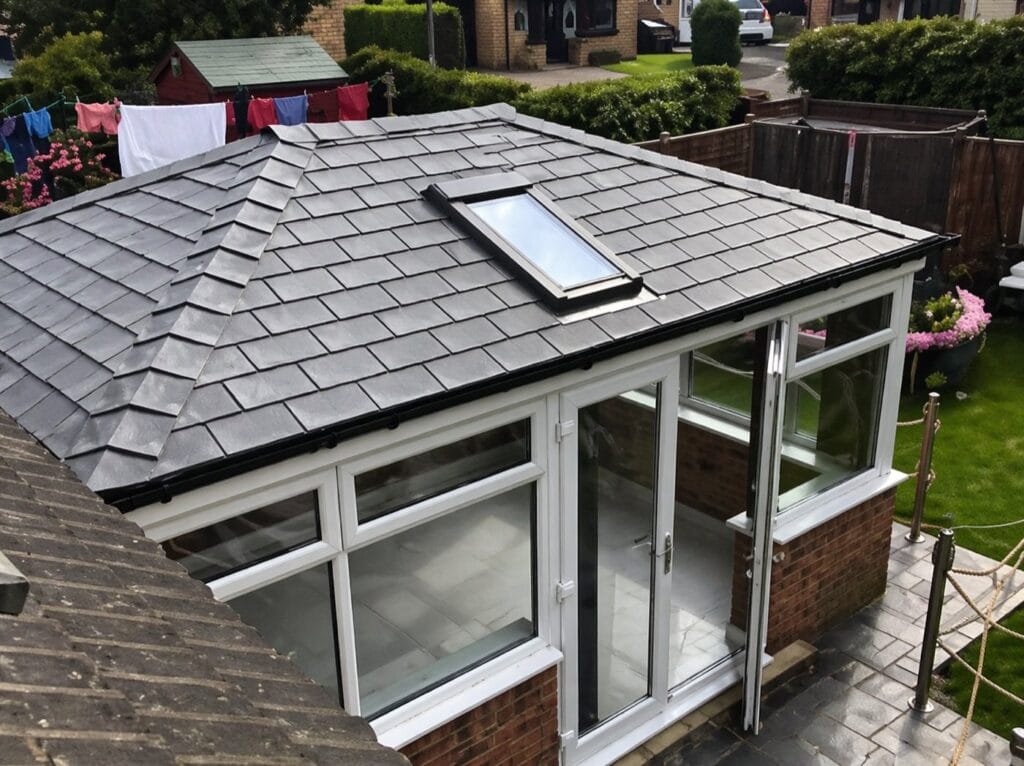
A warm roof replacement swaps the glass or polycarbonate roof for a fully insulated solid roof, usually with lightweight tiles outside and a plastered ceiling inside. Because the ceiling stays close to room temperature, the streaming bars and dripping eaves of an old glazed roof largely disappear. A replacement also deals with worn seals, flashings and gutters at the same time, so it particularly suits older conservatories with both condensation and leaks. A warm roof conservatory is the usual choice for homeowners who want to use the room all year.
Before replacing a roof, check three things. Replacing a glazed roof with a solid one needs a Building Regulations application under LABC guidance, which a reputable installer will handle. The frames and base must be able to carry the new roof, which a survey confirms. A solid roof also reduces daylight from above, so skylights are built in wherever you want the light kept.
Which fix suits your conservatory?
| Situation | Most likely fix |
|---|---|
| Light condensation on windows on cold mornings | Ventilation, steady heating, less moisture |
| Heavy roof condensation, roof sound and not leaking | Conservatory roof insulation |
| Old roof with heavy condensation, leaks and a cold room | Warm roof replacement |
| Misting between the panes | Replace the sealed units |
| Water only during or after rain | Repair the leak, gutters or flashing |
When to get your conservatory roof checked
It is worth having a conservatory roof inspected when condensation or damp keeps returning after a few weeks of better ventilation, steady heating and lower humidity. Warning signs include water dripping from the bars most winter mornings, stains on the house wall below the roof, water or algae trapped inside polycarbonate sheets, mould that returns within days, and a roof more than about 15 years old that is cold in winter and hot in summer.
A specialist survey can confirm whether the cause is condensation, a leak or both, and whether repairs, insulation or a replacement roof makes most sense. If you are weighing up those options, Warm Roof Conservatory can look at the roof and talk you through which approach fits.