A conservatory is cold in winter mainly because its glass roof and walls let heat escape far faster than the rest of your home. A poorly insulated roof, older glazing, cold surfaces that chill you directly, draughts and heating that can’t keep up all add to the problem. Fix the biggest of these and the rest become much easier to manage.
If your conservatory sits empty from November to March, you’re not alone. For many homeowners, the room they love in June becomes a storage space by December.
The main reasons are:
- The roof: a thin glass or polycarbonate roof with little or no conservatory roof insulation.
- The glass walls: older or basic glazing lets heat straight through.
- Cold surfaces: sitting near cold glass makes you feel chilly even when the air is warm.
- Draughts: worn seals, ageing doors and gaps where the conservatory meets the house.
- The floor: a thin concrete base with cold tiles and little or no insulation.
- The heating: most heaters simply can’t keep up with how fast a glass room loses heat.
Why does your conservatory lose so much heat?
Your conservatory loses so much heat because glass and polycarbonate are poor insulators, and most conservatories were never required to be insulated. A standard double glazed conservatory roof (U value 2.8 W/m²K) loses heat around 19 times faster per square metre than a new roof built to today’s Building Regulations limit of 0.15 W/m²K.
Think of it as the difference between sleeping under a thick winter duvet and sleeping under a single bed sheet. The rest of your house has the duvet: insulated loft, cavity walls, modern double glazing. Your conservatory roof has the bed sheet. That’s why a warm roof conservatory, with a solid insulated roof, feels so different in winter.
The reason goes back to how conservatories were built. In England, a ground floor conservatory of 30 m² or less, separated from the house by external walls, doors or windows and not served by the main heating system, is exempt from those energy rules. Builders could use whatever glass or polycarbonate met the budget, and many did. As the rest of the house has been upgraded over the years, the conservatory has often become the weakest part of the home.
Why is your conservatory freezing even with the heating on?
Your conservatory feels freezing with the heating on because your body loses warmth to the cold glass around you, even when the air itself is warm. How warm you feel depends on the surfaces near you, not just the number on the thermostat. In a glass room, you are surrounded by cold surfaces on almost every side and overhead.
It’s the same reason you feel a chill standing next to an open fridge, even in a warm kitchen. Research from Lawrence Berkeley National Laboratory gives the example of someone sitting 1 metre from a large double glazed window on a freezing night, with the room air at 21°C: the surfaces around them average only about 12°C, which is why the room feels far colder than the thermostat says.
Cold glass also creates what feels like a draught. Air touching the glass cools, sinks and rolls across the floor towards your feet. Many people blame a gap in the frame when the real cause is the glass itself, so it’s worth checking for both before spending money on a fix.
Where does the heat escape from a conservatory?
Most of the heat escapes through the roof, followed by the glass walls, gaps around doors and frames, and the floor. Knowing which of these is the weak spot in your conservatory tells you what to fix first.
Roof
The roof is the biggest source of heat loss in most conservatories, especially the polycarbonate roofs common on conservatories built in the 1990s and 2000s. Because warm air rises, the heat you pay for collects under the roof instead of around you at seat level. If your roof is the main problem, a conservatory roof replacement is usually the most effective fix.
Glass walls
The side glazing matters most in older conservatories. Some still have single glazed panels, and early double glazing without modern heat-reflecting coatings performs far worse than today’s units. If you see misting or condensation between the panes, the seal has failed and the unit is no longer doing its job.
Doors and draughts
Draughts come mainly from worn door and window seals, garden doors that no longer close tightly, and the joint where the roof meets the house wall. Rubber seals harden and shrink with age, so a conservatory that felt snug when it was new can become draughty after ten or fifteen years.
Floor
A cold floor is common because many conservatories sit on a simple concrete base finished with tiles. The edges, where the floor meets the outside walls, are the weakest point, which is why the area near the dwarf walls and garden doors often feels coldest underfoot.
Why can’t you heat your conservatory?
You can’t heat your conservatory properly because whatever warmth your heater puts in drains away almost straight away. It’s like trying to fill a bath with the plug pulled out. A bigger heater helps a little, but until you put the plug in, you’ll mostly be paying to warm the garden.
There are two more reasons it feels like a losing battle:
- Nothing stores the warmth. A brick room stays warm for hours after the heating goes off. A glass conservatory cools within minutes, so you’re always starting from cold.
- The cold spreads to the house. If the door to the house is left open, the conservatory pulls warmth out of your living space, and your main heating works harder to make up for it.
A word of warning before adding a radiator: connecting your central heating to the conservatory, or removing the door between it and the house, can mean it’s no longer treated as an exempt conservatory under Building Regulations. It may then have to meet the same energy rules as an extension. Check with your conservatory conversion contractor. A separate electric heater with its own thermostat avoids this problem.
How do you keep your conservatory warm?
To keep your conservatory warm, stop the draughts first, cover the glass at night, keep the door to the house shut, and use a heater with a thermostat and timer. These cheap steps make a noticeable difference. If the room is still too cold to use, the roof is the next thing to look at.
1. Stop the draughts
Draught proofing is the cheapest place to start. Replace worn or flattened seals on windows and doors, fit a brush strip or threshold seal to the garden door, and check the seal where the roof meets the house wall. Hold your hand near the edges of frames on a windy day. If you feel moving air, that’s a gap worth sealing.
2. Cover the glass at night
Blinds on the roof and side windows act like a layer of clothing for the glass, keeping more warmth in the room and blocking the chill you feel from cold surfaces. Close them when it gets dark, and open them on sunny winter days to let free warmth in.
3. Keep the door to the house shut and sealed
Treat the door between the house and the conservatory like a front door. Keep it closed in winter and fit good seals around it, so the cold stays on the conservatory side.
4. Warm up the floor
Thick rugs over cold tiles make an immediate difference to how the room feels. If you’re replacing the floor anyway, that’s the right time to add insulation and electric underfloor heating.
5. Use the right heating, controlled properly
Choose a heater sized for a glass room and give it a thermostat and timer, so it warms the room before you use it rather than running all day. Common choices include electric panel heaters, oil filled radiators, electric underfloor heating and air to air heat pumps. Try not to rely on a portable fan heater: it is expensive to run, and the warmth disappears the moment you switch it off.
6. Upgrade old glazing
Replace any misted double-glazed units, and consider swapping an old polycarbonate or basic glass roof for modern energy efficient glass. Newer roof glass has coatings that reflect heat back into the room in winter and help stop overheating in summer.
Should you replace your conservatory roof?
Yes, if you’ve tried the cheaper fixes and your conservatory is still too cold to use in winter. A conservatory roof replacement, swapping glass or polycarbonate for an insulated solid roof, is the single change that makes the biggest difference, turning the conservatory into a room you can use all year.
What is a warm roof conservatory?
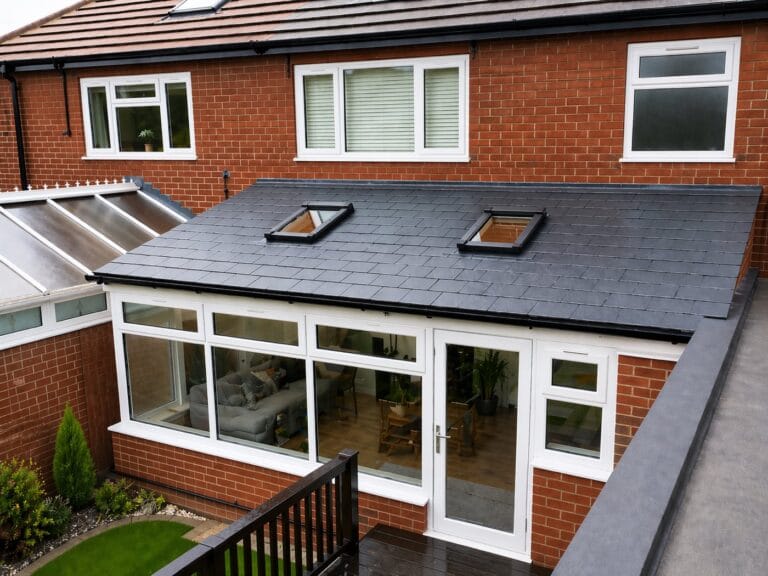
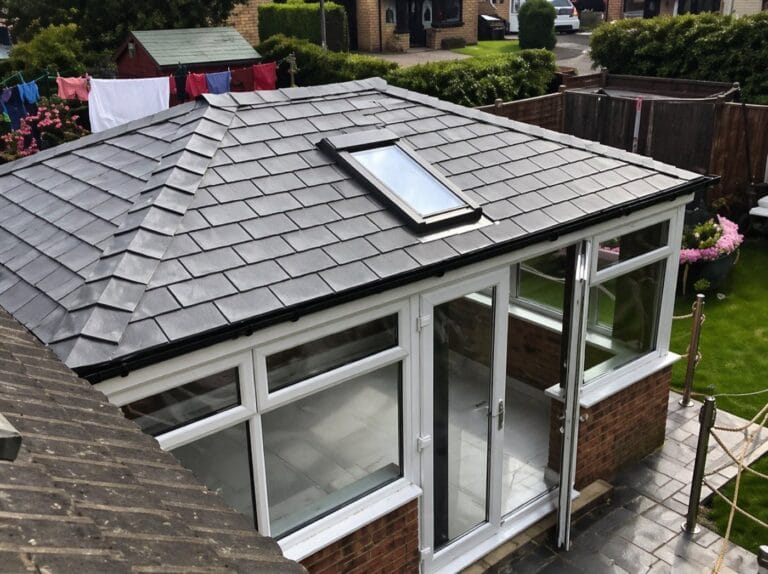
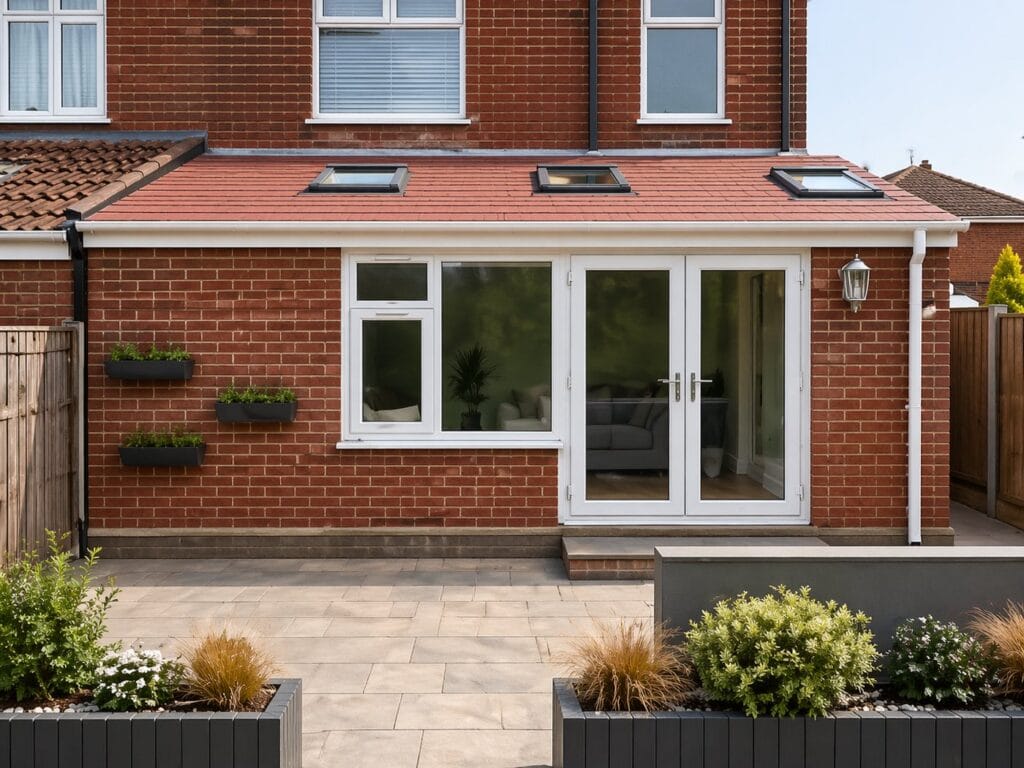
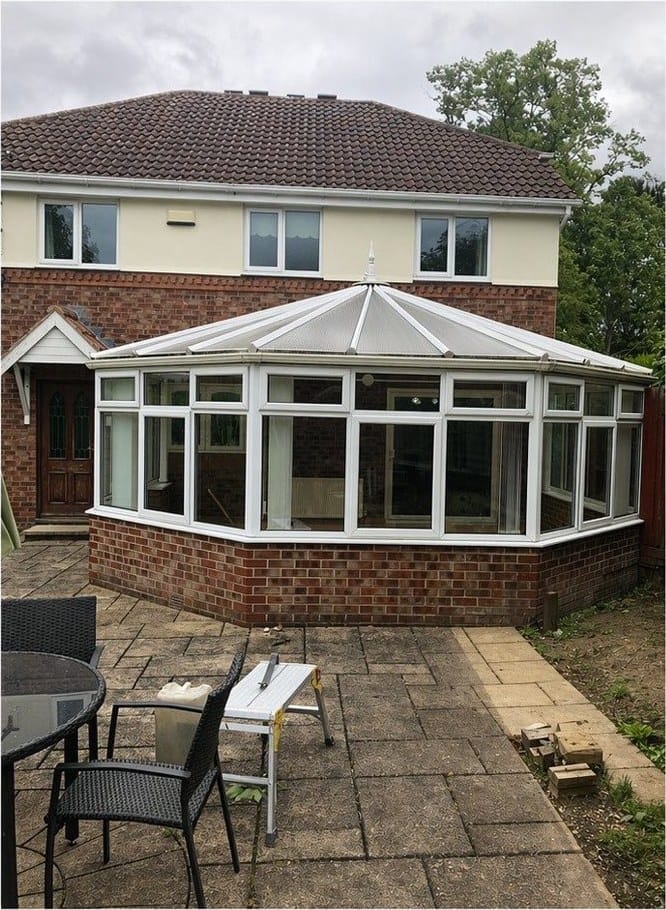
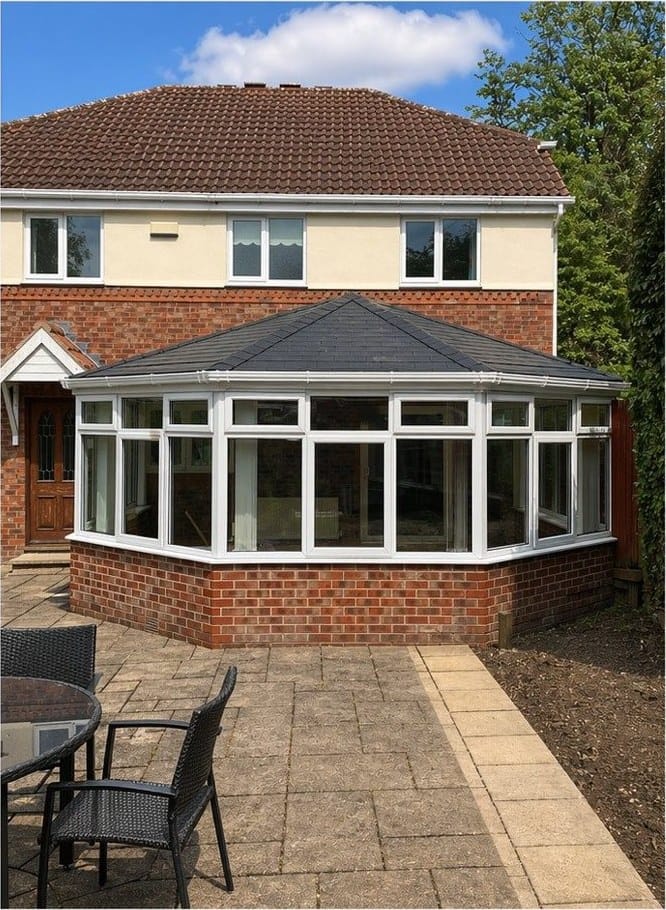
A warm roof conservatory has its glass or polycarbonate roof replaced with a solid, insulated roof, finished with lightweight tiles on the outside and a plastered ceiling inside. Skylights can be built in wherever you want to keep the daylight. Inside, it feels much more like an extension than a greenhouse: warmer in winter, cooler in summer and quieter when it rains.
Warm roof or new glass: which is better?
A warm roof is better if winter warmth is your priority; new glass is better if you want to keep the light and the feeling of an open sky.
| How they compare | Warm(solid) roof | New energy efficient glass |
|---|---|---|
| Winter warmth | Biggest improvement | Noticeable improvement |
| Summer heat | Much cooler | Cooler, with solar-control glass |
| Natural light | Less, unless glazed panels or a lantern are added | Keeps the full glass look |
| Feels like | A proper room or extension | A better performing conservatory |
| Building Regulations | Needs approval | Usually not needed for a direct replacement |
Do you need Building Regulations approval for a warm roof?
Yes. LABC guidance says that re-roofing a conservatory with a solid roof rather than a translucent one needs a Building Regulations application, because conservatories were not generally designed to carry a solid roof. The new roof has to meet energy efficiency standards, and the existing frame, walls and base are checked at survey to confirm they can carry it. A reputable installer will use an approved roof system and handle the application for you. If you live in a listed building or a conservation area, check planning rules too.
What actually improves winter comfort in a conservatory?
Comfort improves most when you deal with the cold glass above and around you, not just the air temperature. Work through the fixes below in order, from cheapest to most involved, and stop when the room is warm enough for how you use it.
| Order | Fix | Cost | What it does |
|---|---|---|---|
| 1 | Draught-proofing | Low | Stops cold air getting in |
| 2 | Blinds, closed at night | Low to medium | Takes the chill off cold glass |
| 3 | Sealing the door to the house | Low | Keeps the rest of your home warm |
| 4 | A heater with a thermostat and timer | Medium | Warms the room when you actually use it |
| 5 | Replacing old or failed glazing | Medium to high | Makes walls and roof less cold to sit beside |
| 6 | A warm (solid) roof | High | Makes the room usable all year round |
For a more lasting solution, replacing your conservatory roof can transform how comfortable the space feels throughout the year. One thing usually not worth doing on its own is digging up a solid floor just to insulate it. The disruption is high and the benefit is often small. Add floor insulation if you’re replacing the floor anyway, and use rugs in the meantime.
Is it possible to have a warm conservatory?
Yes, it’s possible to have a warm conservatory, but how warm depends on how far you’re willing to go. Draught proofing, good blinds and well controlled heating can make a glass conservatory comfortable on most winter days. To use it like a living room all through January, you’ll usually need to replace the roof.
Most conservatory owners give up on winter altogether. Government funded research by BRE found that around 6 in 10 conservatories in England are used less than once a week in winter, while 7 in 10 are used almost every day in summer (the most recent national survey of conservatories, 2011). It helps to decide how you really want to use the space.